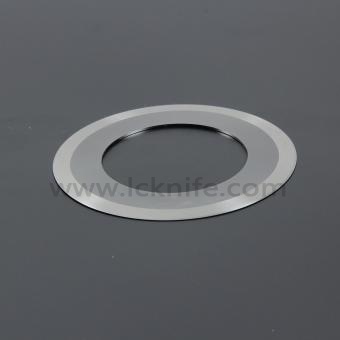
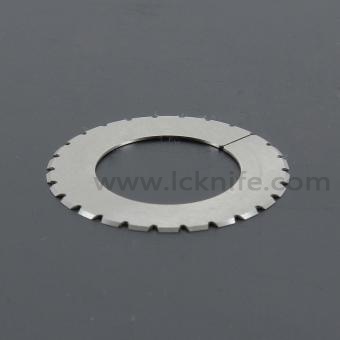
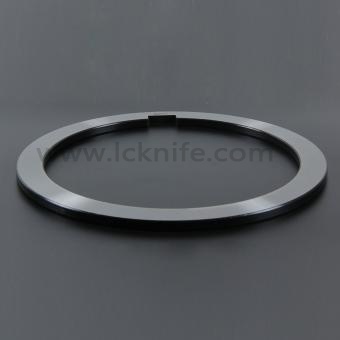
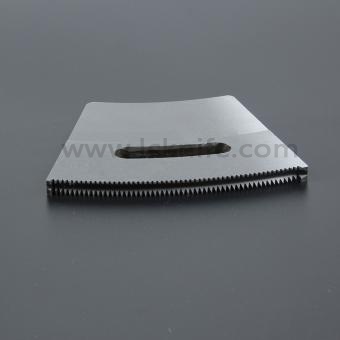
Cuchilla trituradora de doble eje
El material es un componente fundamental en los sistemas de tratamiento de residuos sólidos y recuperación de recursos. Influye decisivamente en la eficiencia de trituración, la vida útil, la fiabilidad operativa y el coste total de propiedad. Actualmente, la industria utiliza cuatro materiales principales para las cuchillas. La selección depende de la composición de los residuos, la intensidad del procesamiento y las necesidades operativas.
El acero SKD11 es un acero para herramientas de trabajo en frío con alto contenido de carbono y cromo. Es la opción más común para aplicaciones de uso general. Con una dureza de HRC 58–60 y una tenacidad moderada, permite trabajar de forma fiable con materiales de dureza media a baja, como plásticos, caucho, papel y compuestos ligeros. El SKD11 es económico y cuenta con protocolos de tratamiento térmico y mecanizado bien establecidos. Requiere poco mantenimiento. Este material es apto para el reciclaje a pequeña y mediana escala bajo ciclos de trabajo estándar.
El acero H13 es un acero para herramientas de trabajo en caliente de cromo, molibdeno y vanadio. En comparación con otros aceros para herramientas de trabajo en caliente, el H13 ofrece una estabilidad térmica superior, alta templabilidad y una fuerte resistencia a la fatiga térmica y al agrietamiento. El H13 mantiene su resistencia y dureza incluso a altas temperaturas. Su resistencia al desgaste y tenacidad están bien equilibradas gracias a su mayor contenido de carbono y vanadio. El H13 se recomienda para triturar residuos sólidos resistentes, como residuos metálicos o residuos que contengan metal.
El NM550 (HBW 550) es un acero estructural resistente a la abrasión. Combina una alta tenacidad (energía de impacto: 30–40 J) con una excepcional resistencia al desgaste (aproximadamente HRC 55). Su microestructura reduce el riesgo de astillamiento y fractura de bordes. Esto aumenta la robustez al manipular residuos con alto contenido de impurezas, como escombros de construcción, residuos municipales mixtos o madera contaminada. El NM550 mejora la tolerancia a fallos y reduce el tiempo de inactividad por objetos extraños. Es idóneo para alimentación variable o mal clasificada.
La selección de materiales debe adaptarse a la materia prima y a los parámetros operativos. SKD11 es ideal para un procesamiento uniforme y de baja abrasión. Utilice DC53 para necesidades de alta resistencia y ciclos de trabajo prolongados. Prefiera H13 cuando la tensión térmica o el contenido de metal sean elevados. Elija NM550 para flujos de residuos muy variables y ricos en impurezas. La adecuación de los materiales a las necesidades optimiza las operaciones y reduce los costos del ciclo de vida.


 Red IPv6 compatibles